Euthanasia
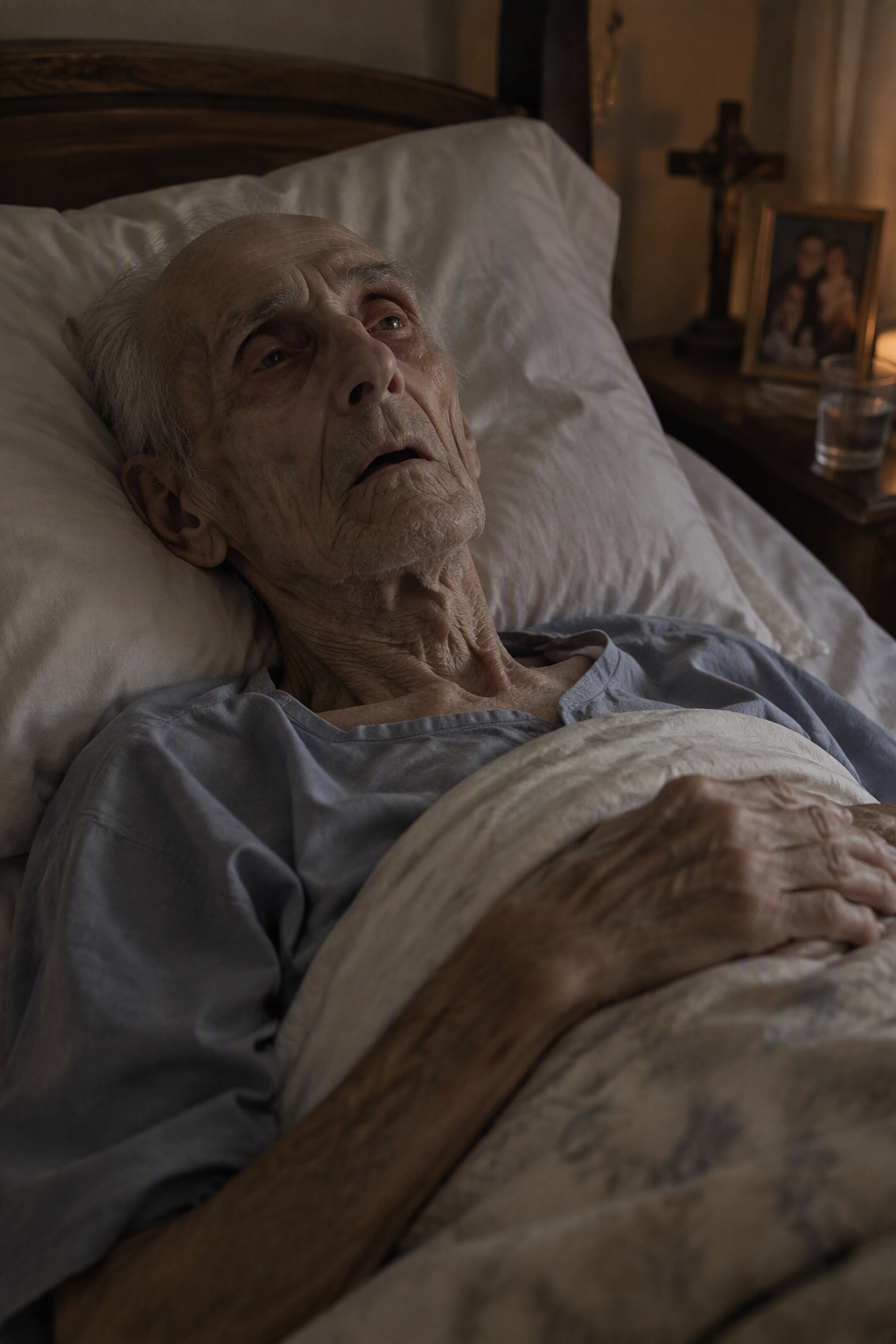
By Ray Ross (Respect Life Team)
You may have read recently in the Venice Gondolier about the husband who took the life of his seriously ill wife. According to the newspaper, this woman had been ill since the late 1990’s – first with Lyme disease, then breast cancer twice, then cancer around the mouth and, more recently, with sciatic nerve damage.
Her health was in serious decline, and she suffered from “acute physical and mental pain.” She begged her husband to take her life. His decision to kill her must have been agonizing.
The mother of a family I know well was placed in a nursing home with dementia. She came down with Covid and the nursing home’s physician made the decision to end her life by stopping all food and water. I’m not sure whether he administered morphine. She lived for five days. I have no idea whether this action was taken with other patients at the nursing home.
Canada has a program called MAID (Medical Assistance in Dying) which now accounts for a substantial share of Canadian deaths - 16,499 in 2024 which was a 7% increase over 2023.
There have been concerns about possible coercion or family/caregiver pressure with the MAID program. The median age for people receiving MAID is 78 and the most common cause is cancer. Nevertheless, the MAID program, in my opinion, puts Canada on a slippery slope with difficult moral, and ethical questions. What if, for example, the family wants grandma out of the way, or a nursing home wants to free up a bed? British Columbia reports significant documentation issues with errors and missing information. Then there are those like Bill Gates from the Davos set who want to reduce the current world population from 8 billion to 1.2 billion. Does a program like MAID desensitize us to the issue of euthanasia and prepare the way for a mass population reduction.
The Catholic Church (e.g. Evangelium Vitae, the Catechism) holds that intentional euthanasia is morally unacceptable, because it violates the dignity of the human person and the commandment ‘Thou shalt not kill.’
Many of us are at an age where we already or may have to face difficult decisions about our own health or the care of a loved one. We see suffering all around us – at Mass, walking our neighborhoods, or an orthopedic waiting room. We pray that when it’s up to us, we always discern and make the loving, right decision.